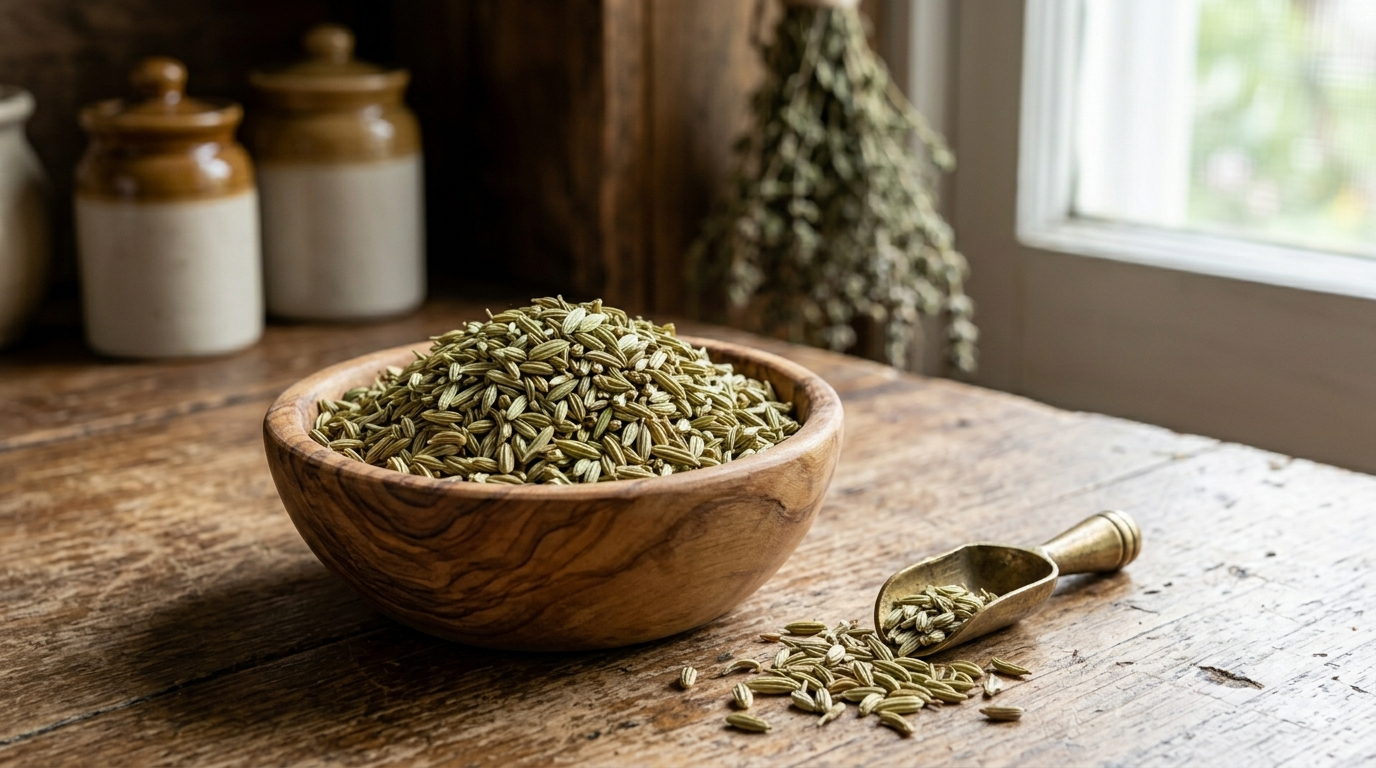
Blog Post: Fennel Seeds After Meals — Why It Works
Category: Tips & Ideas | Est. reading time: 4 minutes
The Tradition
Walk into any restaurant in India, and you will be offered a small bowl of fennel seeds (called saunf) on your way out. In Italy, fresh fennel (finocchio) is served as a digestive aid after heavy meals. In Pakistan and the Middle East, fennel tea is a common after-dinner ritual.
This is not just tradition. It is backed by science.
For centuries, fennel has been used across multiple cultures to prevent gas, soothe indigestion, and freshen breath. Modern research has confirmed what grandmothers already knew: this tiny seed is a powerful digestive remedy.
Why This Works
Fennel seeds contain three active compounds that work together to calm your gut:
CompoundWhat It DoesAnetholeRelaxes smooth muscle tissue in the digestive tract, reducing painful spasms and trapped gasFenchoneAnti-inflammatory; reduces swelling in the gut liningEstragoleAntispasmodic; helps stop intestinal cramping
These compounds also stimulate the production of gastric enzymes — meaning your body digests food faster and more efficiently. Less time fermenting in your gut means less gas and bloating.
Additionally, fennel seeds:
- Act as a carminative (expels trapped gas)
- Have mild antimicrobial properties that can help balance gut bacteria
- Freshen breath naturally by killing odor-causing bacteria in the mouth
How To Use Fennel Seeds
MethodInstructionsBest ForSimple chewChew ½ teaspoon of fennel seeds slowly after meals until they break down and release their oilsImmediate relief; traditional methodFennel teaCrush 1 teaspoon of seeds lightly, steep in 8 oz hot water for 10 minutes, strain, and drinkFull digestive support; sipping after heavy mealsFennel waterSoak 2 teaspoons of seeds in 8 oz cold water overnight, strain, and drink first thing in the morningMorning digestive reset; constipation relief
Pro tip: Do not swallow fennel seeds whole. Chewing is essential because it releases the active oils. Whole seeds pass through your digestive system undigested and offer little benefit.
What Fennel Seeds Help With
ConditionHow It HelpsBloatingAntispasmodic compounds relax intestinal muscles, releasing trapped gasIndigestionStimulates gastric enzymes for faster digestionHeartburnSoothes the esophageal lining and reduces acid reflux symptomsBad breathAntimicrobial compounds kill odor-causing bacteriaMenstrual crampsAnethole has mild estrogen-like effects that can reduce uterine spasmsColic in infantsFennel tea (diluted) is a traditional European remedy, though consult a doctor firstConstipationFiber content + mild laxative effect from seed oils
When To Take Fennel Seeds
TimeWhyImmediately after mealsPrevents gas and bloating before it startsDuring a bloating episodeChewing seeds can provide relief within 10–15 minutesBefore bed (as tea)Soothes the digestive tract overnight, especially after a late dinnerOn an empty stomach (fennel water)Prepares digestion for the day; gentle morning laxative
Dosage Guidelines
FormDosageWhole seeds (chewed)½ to 1 teaspoon after mealsFennel tea1 cup, up to 3 times dailyFennel water1 cup in the morningFennel seed powder½ teaspoon mixed in warm water or sprinkled on food
Fennel is generally recognized as safe by the FDA. Most people can use it daily without issues.
Who Should Be Careful With Fennel
ConditionPrecautionPregnancySmall culinary amounts are fine. Avoid medicinal doses or concentrated supplements without doctor approval (fennel has mild estrogen-like effects)BreastfeedingTraditionally used to increase milk supply, but consult a doctor before using medicinallyEndometriosis or hormone-sensitive conditionsThe estrogen-like effects may be a concern for some; check with your doctorAllergy to carrots, celery, or mugwortFennel is in the same plant family (Apiaceae); cross-reactivity possibleBlood thinnersHigh doses may affect blood clotting due to vitamin K content
If you are taking prescription medications, check with your doctor before using fennel supplements or concentrated extracts. As a spice and tea, it is generally safe for most people.
Fennel vs. Other Digestive Herbs
HerbBest ForHow It Differs From FennelFennelGas, bloating, indigestionMild, pleasant taste; works quickly when chewedPeppermintIBS, cramping, nauseaStronger; can worsen heartburn in some peopleGingerNausea, motion sicknessWarming; better for stomach emptiness, less for gasChamomileAnxiety-related indigestionCalming; milder digestive effectsCarawayGas, bloatingSimilar to fennel; stronger taste
Each herb has its strengths. Fennel is the best choice for post-meal gas and bloating because of how quickly the chewed seeds work.
How To Choose And Store Fennel Seeds
FactorWhat To Look ForColorGreenish-brown; avoid faded or yellowed seedsSmellStrong, sweet licorice aroma; weak smell means old seedsSourceOrganic if possible (fennel seeds can carry pesticide residue)Whole vs. groundBuy whole seeds; they stay fresh longer. Grind as neededStorageAirtight container in a cool, dark cupboard for up to 1 year
Simple Fennel Recipes To Try
After-Meal Chew (traditional)
- ½ teaspoon fennel seeds
- Optional: mix with a few anise seeds or cardamom pods
- Chew slowly for 2–3 minutes after eating
Soothing Fennel Tea
- 1 teaspoon fennel seeds (lightly crushed)
- 8 oz hot water
- Steep 10 minutes, strain
- Optional: add a slice of fresh ginger or a squeeze of lemon
Morning Fennel Water (for constipation)
- 2 teaspoons fennel seeds
- 8 oz cold water
- Soak overnight, strain in the morning
- Drink on an empty stomach
Fennel Seed Powder (for cooking)
- Grind whole seeds in a coffee grinder
- Use in soups, salad dressings, roasted vegetables, or breads
What To Expect
TimeEffect10–15 minutes after chewingReduced gas, less bloating, fresher breath30–60 minutes after fennel teaGentle digestive warmth; reduced crampingMorning after fennel waterSoft, easy bowel movement (if constipated)Daily use over 2–4 weeksMore consistent digestion, less post-meal discomfort
The Bottom Line
Fennel seeds are one of the safest, most effective, and easiest-to-use natural remedies for bloating and indigestion. The tradition of offering fennel after meals is not just cultural — it is practical. It works.
Keep a small container of fennel seeds in your:
- Purse or bag
- Desk at work
- Car
- Kitchen counter
Next time you feel gassy or bloated after a meal, skip the antacid. Chew fennel seeds instead.
Pin This For Later
Fennel seeds after meals — why the tradition works, how to use them, and who should be careful. Science-backed digestive relief from your spice cabinet.
Important Note
A note from Rooted Remedy: Natural remedies are powerful, but they are not instant. Unlike pharmaceutical drugs that force a chemical change, herbs and foods work gently with your body's own systems.
This takes time. Consistency is the secret. Give each remedy at least 5–7 days of regular use before deciding if it works for you.
Sources & References
Information in this article was compiled from publicly available educational resources and scientific literature, including:
- National Institutes of Health (NIH)
- Centers for Disease Control and Prevention (CDC)
- Mayo Clinic
- Cleveland Clinic
- Harvard Health Publishing
- PubMed Research Database


